Built in the booth, not in a boardroom
My Hercules RMX2 spent years in a flight case under the stairs. Life happened. The case gathered dust; the itch never left.
When I finally plugged it back in, the software world had moved on without asking me: subscriptions, mandatory accounts, cloud lockers, the good features behind a paywall. My controller worked fine. Everything around it had become a shopping cart.
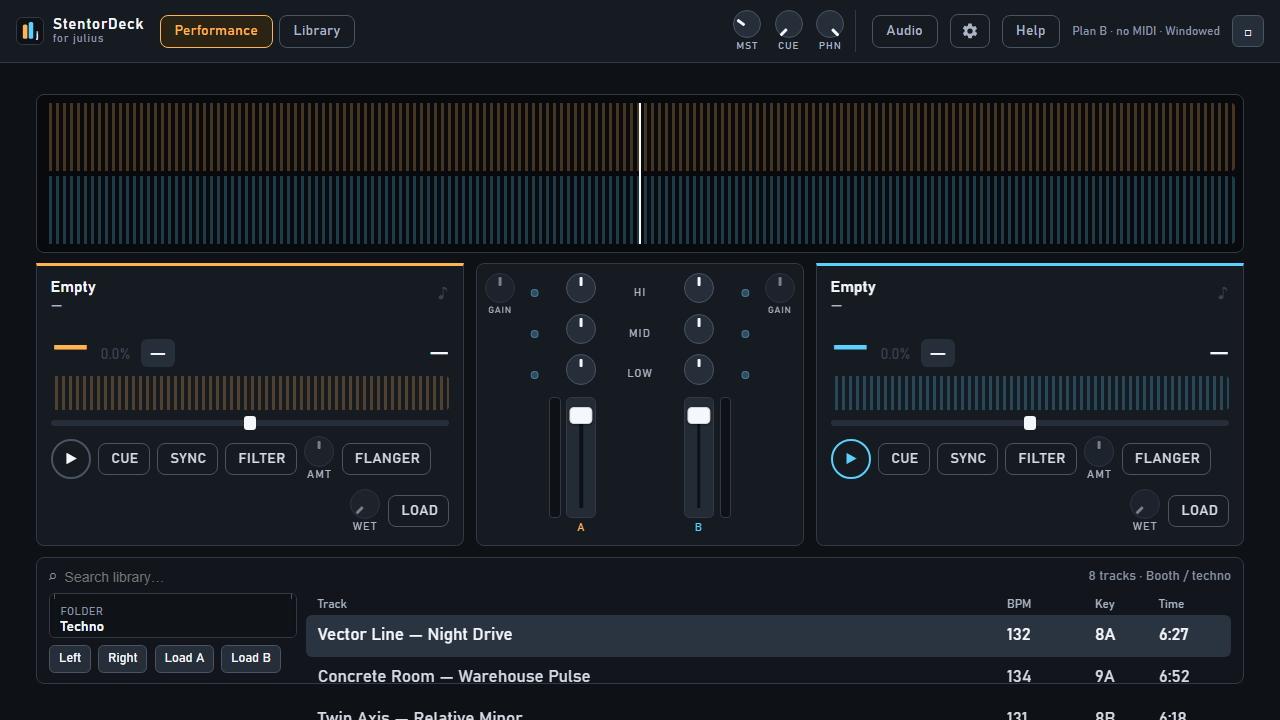
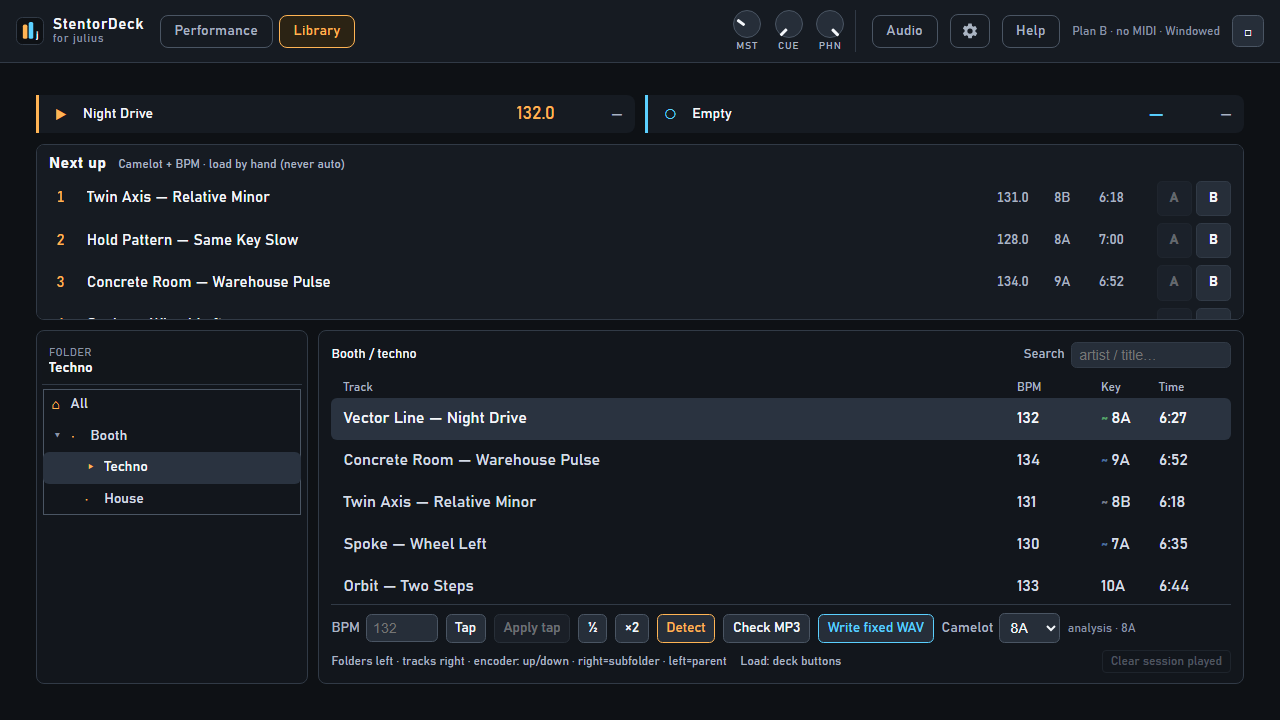
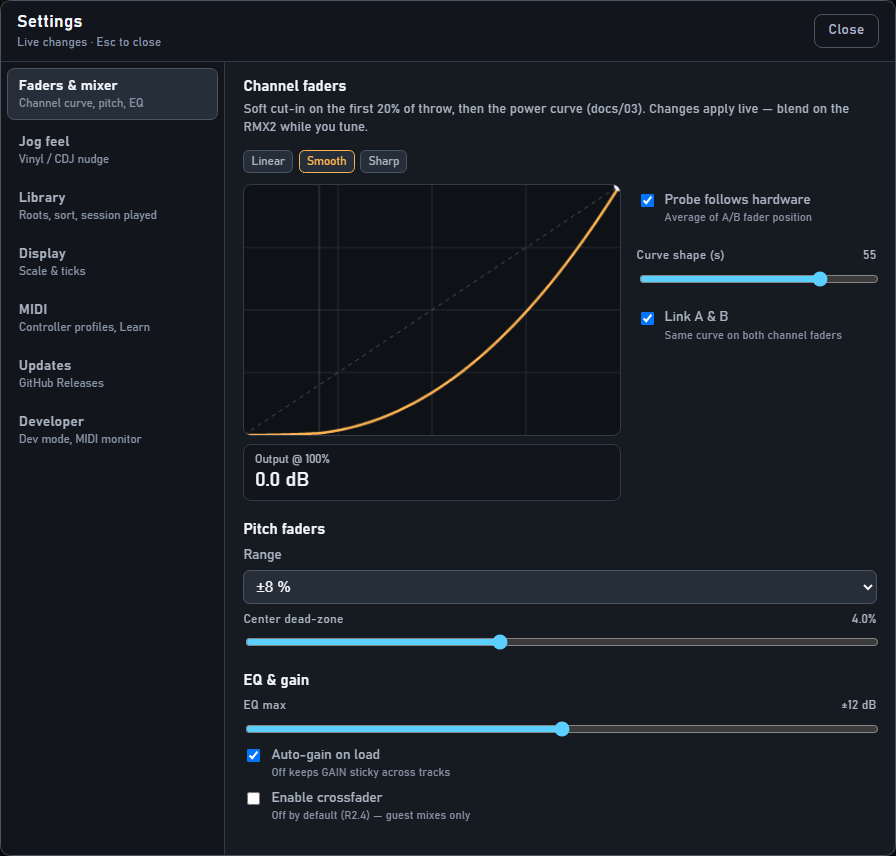
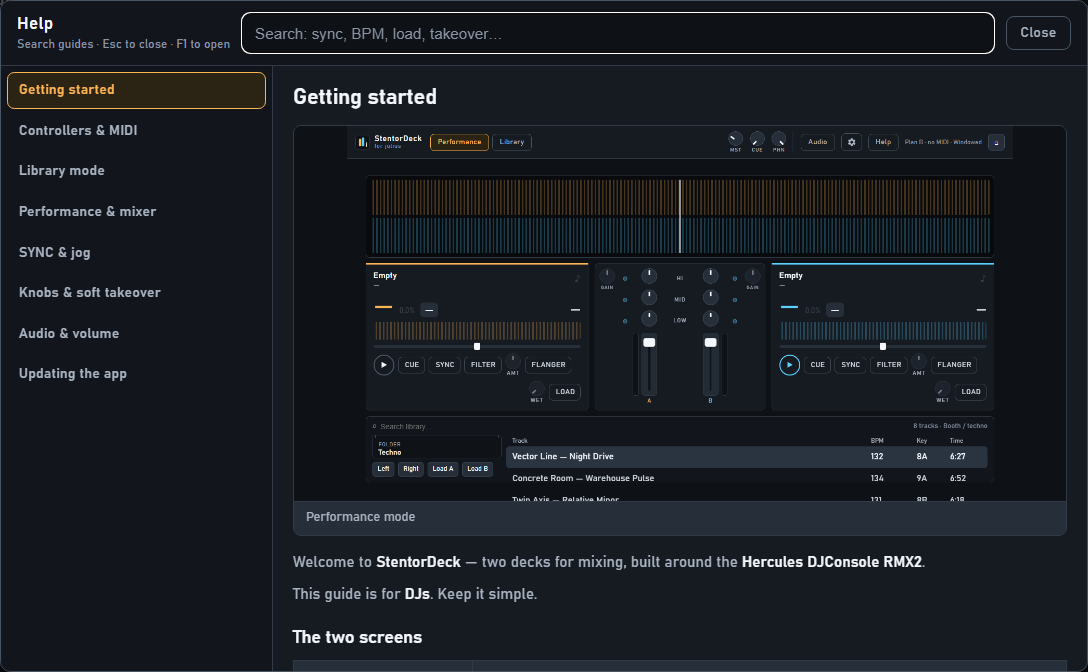
So I did the thing developers do instead of complaining. I wrote my own. Not a toy — a complete DJ system: a real-time dual-deck audio engine, a library that analyses BPM and key while you sleep, and an interface designed to be read from a meter away in a dark booth, with beer in the air and no time to squint.
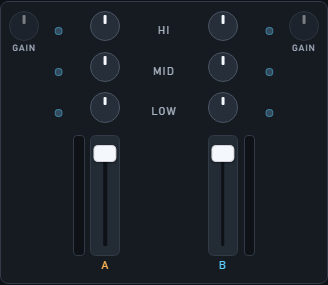
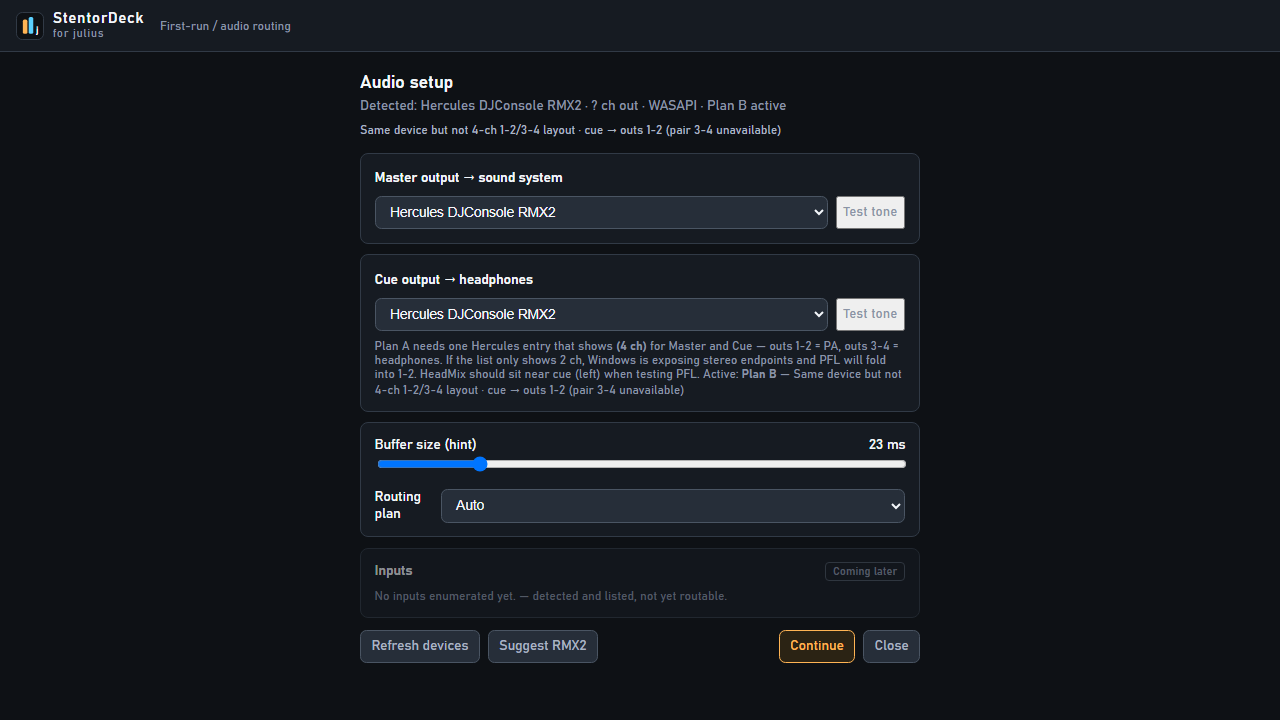
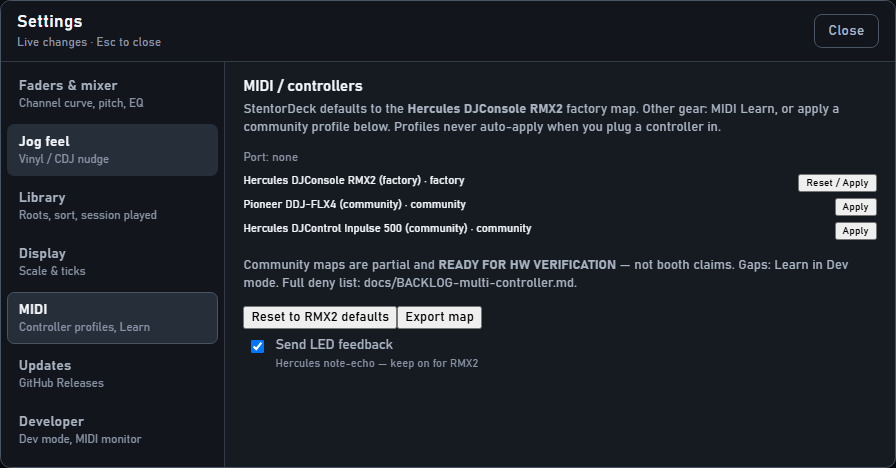
It was born on the RMX2 — every knob, fader and jog wheel mapped the way the hardware deserves. But it grew: with built-in MIDI learn and community profiles, it now plays nice with other controllers too. And because this grew out of stubbornness rather than a business plan, it's free, open source, and always will be.
“Named after Stentor, the Greek herald whose voice carried like fifty men. Your mix should carry at least that far.” — why the name